Imagine watching your kindergartener dive into a world of imagination, where every toy sparks creativity and learning. Pretend play toys do exactly that—they turn ordinary moments into exciting adventures.
If you want to give your child a fun way to develop important skills like problem-solving, communication, and empathy, choosing the right pretend play toys is key. Keep reading to discover how these toys can transform your child’s playtime and help them grow in surprising ways.
Benefits Of Pretend Play
Pretend play is a fun way for kindergarteners to learn and grow. It helps children use their imagination and explore new ideas.
This type of play supports many important skills that help kids in school and life. Pretend play toys make learning exciting and meaningful.
Enhancing Creativity
Pretend play lets children create stories and new worlds. They use their imagination to invent characters and situations.
This kind of play encourages kids to think outside the box and try new ideas. It helps them become more creative thinkers.
Building Social Skills
When children play pretend with others, they learn how to share and cooperate. They practice taking turns and listening.
This interaction helps kids understand other people’s feelings and work well in groups. It builds strong social connections.
- Sharing ideas and toys
- Following simple rules
- Expressing emotions
- Working as a team
Improving Language Development
Pretend play gives children a chance to use new words and practice talking. They tell stories and describe their actions.
This helps improve their vocabulary and speaking skills. It also supports better understanding and listening.
- Using new words in context
- Practicing sentence structure
- Listening to others
- Asking and answering questions
Encouraging Problem Solving
Pretend play challenges children to find solutions. They decide how to fix problems in their stories or games.
This practice helps kids think carefully and plan ahead. It builds skills that are useful in school and daily life.
- Making choices
- Planning steps
- Trying different ideas
- Learning from mistakes
Credit: www.amazon.com
Top Pretend Play Toys
Pretend play toys help kindergarteners use their imagination. They learn social skills and creativity. These toys support role-playing and make learning fun.
Choosing the right toys encourages children to explore different roles and stories. Below are some popular types of pretend play toys for young kids.
Role-playing Sets
Role-playing sets let children act out real-life jobs and scenarios. They can pretend to be doctors, chefs, or firefighters. These sets often include tools and costumes to enhance the experience.
- Doctor kits with stethoscopes and bandages
- Kitchen sets with pots, pans, and utensils
- Tool sets for fixing and building
- Firefighter helmets and hoses
Building And Construction Toys
Building toys help children develop fine motor skills and problem-solving. They can create houses, towers, and vehicles. These toys often come in bright colors and easy shapes.
| Toy Type | Material | Skill Focus |
| Wooden Blocks | Wood | Balance and Design |
| Plastic Bricks | Plastic | Creativity and Planning |
| Magnetic Tiles | Plastic with Magnets | Spatial Awareness |
| Foam Blocks | Foam | Safe Building |
Dress-up Accessories
Dress-up accessories allow children to explore different characters. They can try on hats, glasses, and costumes. These items help with storytelling and role exploration.
- Hats like crowns, firefighter helmets, and chef caps
- Glasses and masks to change appearance
- Costumes representing animals or professions
- Jewelry and scarves for added fun
Miniature Households
Miniature household toys let children imitate family life. They can use small furniture, dishes, and dolls. These toys encourage caring and sharing behaviors.
| Item | Purpose |
|---|---|
| Miniature Furniture | Set up rooms and homes |
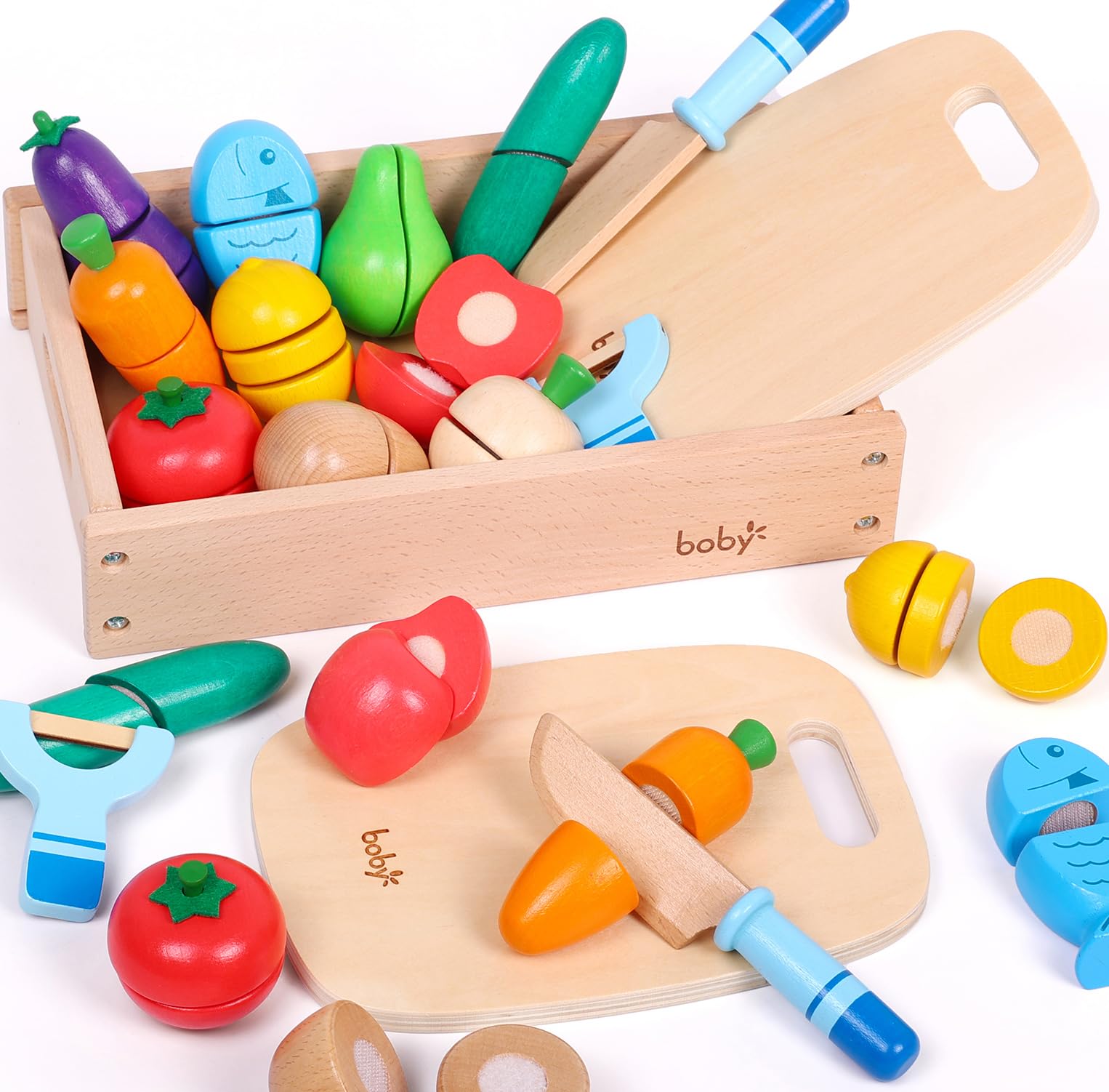
| Plastic Food | Practice cooking and serving |
| Dolls and Figures | Role-play family members |
| Small Appliances | Learn household chores |
Choosing Safe Toys
Pretend play toys help kindergarteners learn and have fun. Safety is very important when picking these toys.
Parents and teachers should check toys carefully. Safe toys protect children from harm and support healthy play.
Age-appropriate Materials
Toys should match the child’s age and skills. Materials that are too small or sharp can cause accidents.
- Choose toys labeled for kindergarten age
- Avoid small parts that can be swallowed
- Pick soft or rounded edges to prevent cuts
- Look for clear age recommendations on packaging
Non-toxic Components
Toys should not contain harmful chemicals. Non-toxic paints and plastics keep children safe during play.
| Material | Safety Feature | Why It Matters |
|---|---|---|
| Paint | Non-toxic, lead-free | Prevents poisoning if touched or mouthed |
| Plastic | BPA-free, phthalate-free | Reduces risk of hormone disruption |
| Fabric | Hypoallergenic, safe dyes | Prevents allergic reactions and skin irritation |
Durability And Quality
Strong toys last longer and stay safe. Poor quality toys break easily and may cause injuries.
Look for these durability features:
- Sturdy materials like solid wood or thick plastic
- Securely attached parts to avoid choking hazards
- Well-made finishes that resist peeling or cracking

Credit: www.amazon.com
Incorporating Pretend Play At Home
Pretend play helps kindergarteners learn and grow. It sparks creativity and social skills.
You can support pretend play easily at home. Small changes create big chances to play.
Creating Play Zones
Set up areas in your home where kids can play pretend. These zones invite kids to imagine.
- Use a corner with cushions and blankets for a reading or story zone.
- Create a kitchen area with toy food and utensils.
- Make a dress-up station with hats and clothes.
- Keep art supplies nearby for crafts and drawing.
Encouraging Storytelling
Storytelling builds language skills and imagination. Ask children to tell stories about their play.
- Start by asking simple questions about their play scene.
- Encourage them to describe characters and actions.
- Help them create a beginning, middle, and end.
- Join in by adding parts to their story.
Using Everyday Items
Household objects can become toys in pretend play. Use them to inspire new ideas.
| Item | Pretend Use |
| Box | Car, house, or spaceship |
| Spoons | Magic wands or cooking tools |
| Scarves | Capes or costumes |
| Empty containers | Treasure chests or storage |
Pretend Play In Kindergarten
Pretend play helps kindergarteners use their imagination. It lets them act out real-life roles and situations.
This type of play supports social, emotional, and language growth. It also builds problem-solving skills.
Teacher’s Role
Teachers guide pretend play by offering ideas and materials. They watch and join in to support learning.
They encourage children to share, take turns, and use new words. Teachers also ask questions to deepen thinking.
- Provide diverse props and costumes
- Model positive social behavior
- Ask open-ended questions
- Encourage storytelling and role-switching
Group Play Activities
Group pretend play helps children learn cooperation. Kids work together to create stories and solve problems.
Teachers can set up play areas like a store, kitchen, or doctor’s office. These settings promote teamwork and sharing.
- Role-playing a family or community helpers
- Building a pretend city or restaurant
- Creating a store to practice buying and selling
Integrating Learning Goals
Pretend play connects to many learning goals in kindergarten. It supports language, math, and social skills.
Teachers can plan play that matches lessons. For example, counting money or practicing new vocabulary during play.
- Use play to teach numbers and counting
- Build vocabulary with themed props
- Practice problem-solving in social scenarios
- Encourage empathy through role reversal

Credit: www.walmart.com
Frequently Asked Questions
What Are The Best Pretend Play Toys For Kindergarteners?
The best pretend play toys include kitchen sets, doctor kits, dress-up clothes, and tool benches. These toys boost creativity and social skills. They are safe, age-appropriate, and encourage role-playing activities. Choose toys that inspire imagination and support learning.
How Do Pretend Play Toys Benefit Kindergarteners?
Pretend play toys enhance creativity, communication, and problem-solving skills. They help children develop empathy and cooperation by acting out real-life scenarios. These toys also improve fine motor skills and boost confidence. Overall, they support cognitive and emotional growth in early childhood.
What Safety Features Should Pretend Play Toys Have?
Pretend play toys should be non-toxic, durable, and free from small parts. Look for smooth edges and child-safe materials. Ensure toys meet safety standards like ASTM or CPSC. Safety features prevent choking hazards and injuries during active play.
How Can Parents Encourage Pretend Play At Home?
Parents can create themed play areas and provide diverse props. Join in play to model creativity and social interaction. Rotate toys regularly to keep interest high. Encourage storytelling and role-playing to deepen the pretend play experience.
Conclusion
Pretend play toys help kindergarteners learn and grow every day. They boost creativity and build important social skills. Kids explore new roles and express their feelings through play. These toys also support thinking and problem-solving abilities. Choosing the right pretend play toys makes learning fun and meaningful.
Watch children enjoy, imagine, and develop as they play. Pretend play opens doors to endless adventures and learning moments. It’s a simple way to help young minds grow strong and happy.