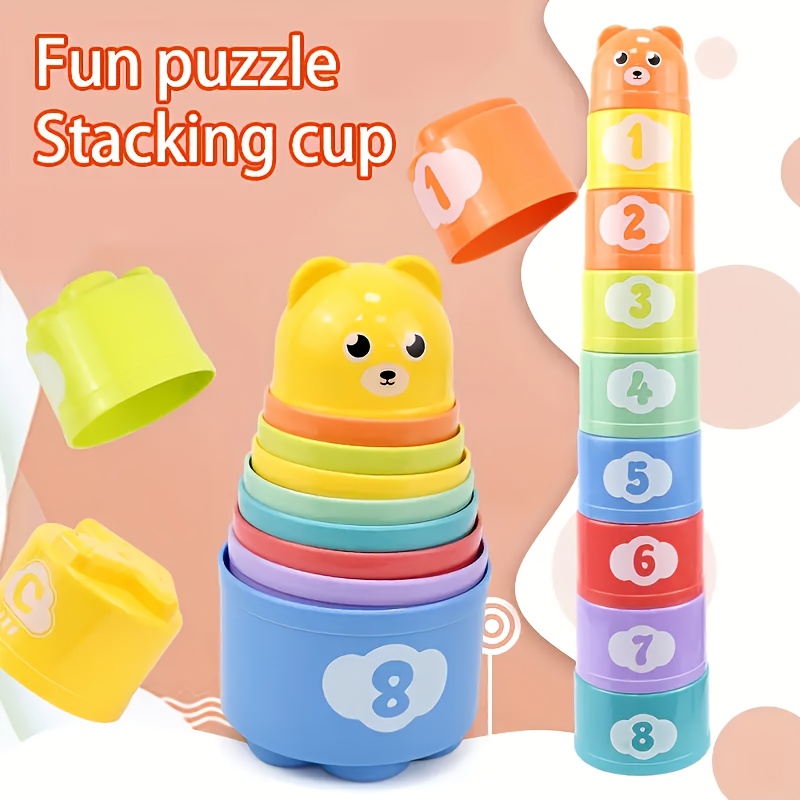
Are you looking for a simple toy that can do wonders for your child’s growth? Stacking cups might seem like just colorful plastic pieces, but they offer so much more.
These little cups can boost your child’s brain, hands, and creativity all at once. Imagine a toy that keeps your child busy, learning, and having fun without screens or complicated instructions. If you want to discover how stacking cups can help develop your child’s skills in a natural and enjoyable way, keep reading.
You’ll be surprised at the powerful benefits hidden in this simple toy.

Cognitive Skill Boost
Stacking cups help children develop important thinking skills. They learn how to solve problems and remember details.
Playing with stacking cups also trains the brain to recognize patterns. This builds a strong base for learning.
Enhances Problem Solving
Children face challenges when stacking cups. They figure out how to balance and arrange cups in different ways.
- Learn cause and effect by testing cup positions
- Develop hand-eye coordination through trial and error
- Improve focus by completing stacking tasks
Improves Memory Recall
Stacking cups help kids remember shapes and colors. They repeat patterns and sequences to strengthen memory.
| Memory Skill | How Stacking Cups Help |
| Visual Memory | Recall cup colors and sizes |
| Working Memory | Remember order of stacking |
| Spatial Memory | Recall where cups fit together |
Encourages Pattern Recognition
Kids spot and create patterns using the cups. This skill supports early math and reading abilities.
- Alternate cup colors
- Stack cups by size from largest to smallest
- Create repeating color sequences
Motor Skill Development
Stacking cups help children improve their motor skills. These toys encourage hand and finger movements.
Playing with stacking cups supports brain and muscle coordination for young kids.
Strengthens Hand-eye Coordination
Stacking cups require kids to look carefully and place cups correctly. This action improves hand-eye coordination.
Kids practice matching what they see with their hand movements to stack cups properly.
- Watch the cup’s position
- Move hand to pick up the cup
- Place cup on top without falling
Builds Fine Motor Skills
Picking up and stacking cups helps children use small muscles in their fingers and hands. This builds fine motor skills.
Fine motor skills are important for tasks like writing, buttoning clothes, and using utensils.
- Grasping cups of different sizes
- Holding cups steadily
- Stacking cups in a precise order
Promotes Dexterity And Control
Stacking cups require careful finger movements. Kids learn to control their hands with more skill and speed.
Better dexterity helps children do daily tasks more easily and confidently.
- Adjusting grip strength
- Balancing cups without dropping
- Coordinating fingers for smooth stacking
Social Interaction Benefits
Stacking cups are more than just toys. They help children learn important social skills. Playing with others using these toys can improve how kids interact.
These toys encourage cooperation, communication, and patience. Kids learn to work together, talk, and wait their turn. These skills are vital for their growth.
Encourages Cooperative Play
Stacking cups teach kids to play together. Children often need to work as a team. They can build towers or create patterns with their friends.
Cooperation helps children understand the value of teamwork. They learn to share ideas and combine efforts to achieve a common goal.
- Kids learn to listen to others
- They share their ideas during play
- Working together strengthens friendships
Develops Communication Skills
Playing with stacking cups requires talking. Kids discuss how to stack the cups. They express their ideas and give instructions.
Through this, children improve their language skills. They learn new words and how to express themselves clearly.
- Children practice using polite words
- They describe what they want to build
- Talking helps them solve problems together
Fosters Patience And Turn-taking
Using stacking cups teaches patience. Kids often need to wait while their friends take a turn. They learn not to interrupt and to respect others' time.
Turn-taking is a key social skill. It helps children understand fairness and equality. They learn that everyone gets a chance to play.
- Children practice waiting patiently
- They understand sharing is important
- Turn-taking builds trust among friends

Creativity And Imagination
Stacking cups are simple toys that boost a child's creativity. They offer endless ways to play and learn.
These toys help children think outside the box. Kids use them to explore their world in new ways.
Inspires Innovative Play
Stacking cups let kids create many different structures. They can build towers, castles, or even bridges.
- Encourages problem-solving skills
- Promotes spatial awareness
- Boosts hand-eye coordination
Supports Role-playing Activities
Children use stacking cups in role-playing games. They can pretend the cups are food, animals, or vehicles.
| Role-Play Idea | Activity |
| Cooking | Use cups as pretend pots and pans |
| Zoo | Arrange cups as animal homes |
| Race Track | Line cups as obstacles for toy cars |
Emotional Growth
Stacking cups help children develop important emotional skills. Playing with these toys gives kids chances to feel proud and learn how to handle challenges.
This simple activity supports children’s feelings and helps them grow emotionally in a healthy way.
Boosts Confidence Through Achievement
When children stack cups successfully, they feel proud of their work. This pride builds their confidence and encourages them to try new things.
- Completing a tower shows them they can solve problems.
- Each success helps them believe in their abilities.
- Confidence grows with every new shape or height they reach.
Teaches Persistence And Patience
Stacking cups is not always easy. Sometimes towers fall down, and children need to try again.
| Benefit | How Stacking Cups Helps |
| Persistence | Encourages kids to keep trying after failure |
| Patience | Teaches waiting and careful placement of cups |
| Problem-solving | Helps children think about how to balance the cups |
Educational Value
Stacking cups are simple toys that help children learn through play. They support key skills that are useful for early education.
These toys make learning fun and hands-on. Kids can explore shapes, sizes, and colors while stacking cups.
Introduces Basic Math Concepts
Stacking cups teach children about numbers and counting. They learn to count cups as they stack them.
Kids also understand size order and spatial awareness by arranging cups from big to small.
- Counting the number of cups
- Comparing sizes (big, medium, small)
- Understanding order and sequence
- Learning about balance and stability
Enhances Color And Size Recognition
Stacking cups come in bright colors that attract children’s attention. Kids learn to identify and name different colors.
The varying sizes of cups help children notice differences and sort objects by size. This builds their observation skills.
- Recognizing colors like red, blue, green, and yellow
- Sorting cups by size
- Matching colors and sizes
- Improving hand-eye coordination
Choosing The Right Stacking Cups
Stacking cups are a fun and educational toy for young children. They help develop fine motor skills, hand-eye coordination, and problem-solving abilities. Choosing the right stacking cups is important to ensure safety and maximize learning benefits.
This guide covers key points to consider when selecting stacking cups. Focus on material safety, age appropriateness, and design features that make the toy both safe and enjoyable.
Material Safety Considerations
Always check the materials used in stacking cups. Non-toxic, BPA-free plastics are best. Avoid cups with sharp edges or small detachable parts. These can cause choking hazards or injuries.
- Look for BPA-free and phthalate-free labels
- Choose cups made from durable, child-safe plastic
- Avoid cups with paint that can chip off
- Ensure there are no rough or sharp edges
- Check for certification marks like ASTM or EN71
Age Appropriateness
Select stacking cups that match the child’s age and developmental stage. Cups designed for toddlers are larger and easier to handle. Some sets include numbers or colors to support early learning.
| Age Group | Recommended Cup Features | Safety Tips |
|---|---|---|
| 6 months - 1 year | Large cups, soft edges, easy to grasp | Avoid small parts, ensure non-toxic materials |
| 1 - 2 years | Bright colors, stackable shapes, numbered cups | Check for sturdy construction, smooth surfaces |
| 2 - 3 years | Smaller cups, more pieces, educational prints | Supervise use to prevent choking on small parts |
Design Features To Look For
Good design improves play and learning experience. Look for cups that nest easily and stack securely. Bright colors and clear markings help children recognize patterns and sizes.
Important design features include:
- Textured surfaces for better grip
- Different sizes for sorting and stacking
- Clear, non-fading colors
- Lightweight yet sturdy materials
- Easy to clean surfaces
Tips For Maximizing Benefits
Stacking cups are simple toys that help children learn many skills. Using them the right way can improve their benefits.
Try different activities to keep playtime fun and educational. This helps children grow in many areas.
Incorporating Stacking Cups Into Daily Play
Use stacking cups during daily routines like bath time or snack time. This makes learning natural and fun.
Encourage children to stack cups by size or color. This builds their sorting and matching skills.
- Stack cups by size from big to small
- Sort cups by color groups
- Count cups while stacking
- Use cups to build simple towers
Encouraging Group Activities
Playing with stacking cups in groups helps children learn teamwork. They share and solve problems together.
Group play also improves communication and social skills. Kids take turns and listen to each other.
- Build towers together as a team
- Have races to stack cups fastest
- Create patterns and shapes as a group
- Help each other fix fallen stacks
Setting Challenges To Promote Growth
Give children small challenges with stacking cups. This encourages problem solving and fine motor skills.
Increase difficulty slowly. This keeps children interested and helps them improve step by step.
- Stack cups in a specific color order
- Build towers of different heights
- Time how fast they can stack and unstack
- Try stacking cups with eyes closed
Frequently Asked Questions
What Developmental Skills Do Stacking Cups Improve?
Stacking cups enhance fine motor skills, hand-eye coordination, and spatial awareness. They also promote problem-solving and cognitive development in toddlers.
How Do Stacking Cups Support Early Learning?
Stacking cups teach colors, sizes, and sequencing. They encourage creativity and logical thinking through play, aiding early childhood education.
Are Stacking Cups Safe For Infants?
Yes, stacking cups are typically made from non-toxic, BPA-free plastic. They are designed with smooth edges, making them safe for infants and toddlers.
Can Stacking Cups Boost Social Skills In Children?
Stacking cups encourage cooperative play and sharing. Playing with others helps children develop communication and teamwork skills naturally.
Conclusion
Stacking cups help children learn while having fun. They improve hand-eye coordination and fine motor skills. Kids practice problem-solving by figuring out how to stack. The toy encourages creativity with colors and shapes. It keeps children engaged without screen time.
Parents find it easy to use at home or on trips. Small pieces make it safe for young kids. Overall, stacking cups support early growth in many ways. A simple toy with many big benefits. Great for play and learning combined.