Have you ever wondered who invented crossword puzzles, those captivating grids that challenge your mind and boost your vocabulary? If you’re like many who enjoy filling in those black and white squares, knowing the story behind their creation makes the experience even more exciting.
This isn’t just about history—it’s about discovering how one person’s idea changed the way millions of people around the world play, learn, and relax every day. Keep reading, and you’ll uncover surprising facts that will make your next crossword puzzle even more enjoyable.
Early Word Games
Word games have been part of human culture for thousands of years. People enjoyed puzzles that tested their language skills.
These early games laid the foundation for modern puzzles like crossword puzzles. They show how people love playing with words.
Ancient Puzzle Traditions
Ancient civilizations created word and symbol puzzles to entertain and teach. These puzzles used patterns and letters to challenge minds.
For example, ancient Greeks used word squares. These are grids where words read the same across and down. They showed early puzzle thinking.
- Word squares from ancient Greece
- Riddles and language puzzles in ancient Egypt
- Symbol puzzles in early Asian cultures
Predecessors To Crossword Puzzles
Before crossword puzzles, people enjoyed various word challenges. These helped build skills in spelling and vocabulary.
One example is acrostics, where the first letters of each line form a word. Another is word squares, which are close to crosswords.
- Acrostics with hidden words
- Word squares with words crossing each other
- Word jumbles that mix letters for players to solve
Creation Of The First Crossword
Crossword puzzles are popular word games that challenge your vocabulary. They began more than a hundred years ago.
The first crossword puzzle was created to entertain and test word skills. It set the base for many puzzles today.
Arthur Wynne's Role
Arthur Wynne invented the first crossword puzzle. He was a journalist from Liverpool, England.
Wynne worked for a newspaper in New York City. He wanted to create a new type of word puzzle for readers.
The 1913 Puzzle Release
The first crossword puzzle appeared in the New York World newspaper. It was published on December 21, 1913.
The puzzle looked like a diamond shape with empty squares. Clues helped players fill in words both across and down.
- Diamond shape grid
- Empty squares for answers
- Clues listed for across and down
- Simple and fun for readers
Design And Structure
Crossword puzzles are a type of word game that challenge players to fill in words based on clues. The design and structure of these puzzles shape how players solve them.
Understanding the early design helps us see how crosswords became popular and evolved over time.
Unique Features Of Early Crosswords
The first crossword puzzle was created by Arthur Wynne in 1913. It had a diamond shape with no black squares.
Early crosswords used simple word lists and straightforward clues. The puzzles were smaller than many puzzles today.
- Diamond shape grid without black squares
- Words read across and down
- Simple, clear clues for each word
- Smaller puzzle size for quick solving
Evolution Of Puzzle Formats
Over time, crossword puzzles became more complex and varied. The square grids became standard with black squares to separate words.
New formats appeared, including themed puzzles and larger grids. Clues also grew more creative and challenging.
- Introduction of black squares to separate words
- Themed puzzles with related words
- Larger grids with more words
- More difficult and tricky clues

Credit: www.telegraph.co.uk
Crossword Popularity Growth
Crossword puzzles started as a fun word challenge for readers. They quickly gained fans across many countries. Their simple rules and fun nature made them easy to enjoy.
Over time, crossword puzzles grew from small games to popular daily activities. People of all ages began to solve them regularly.
Expansion In Newspapers
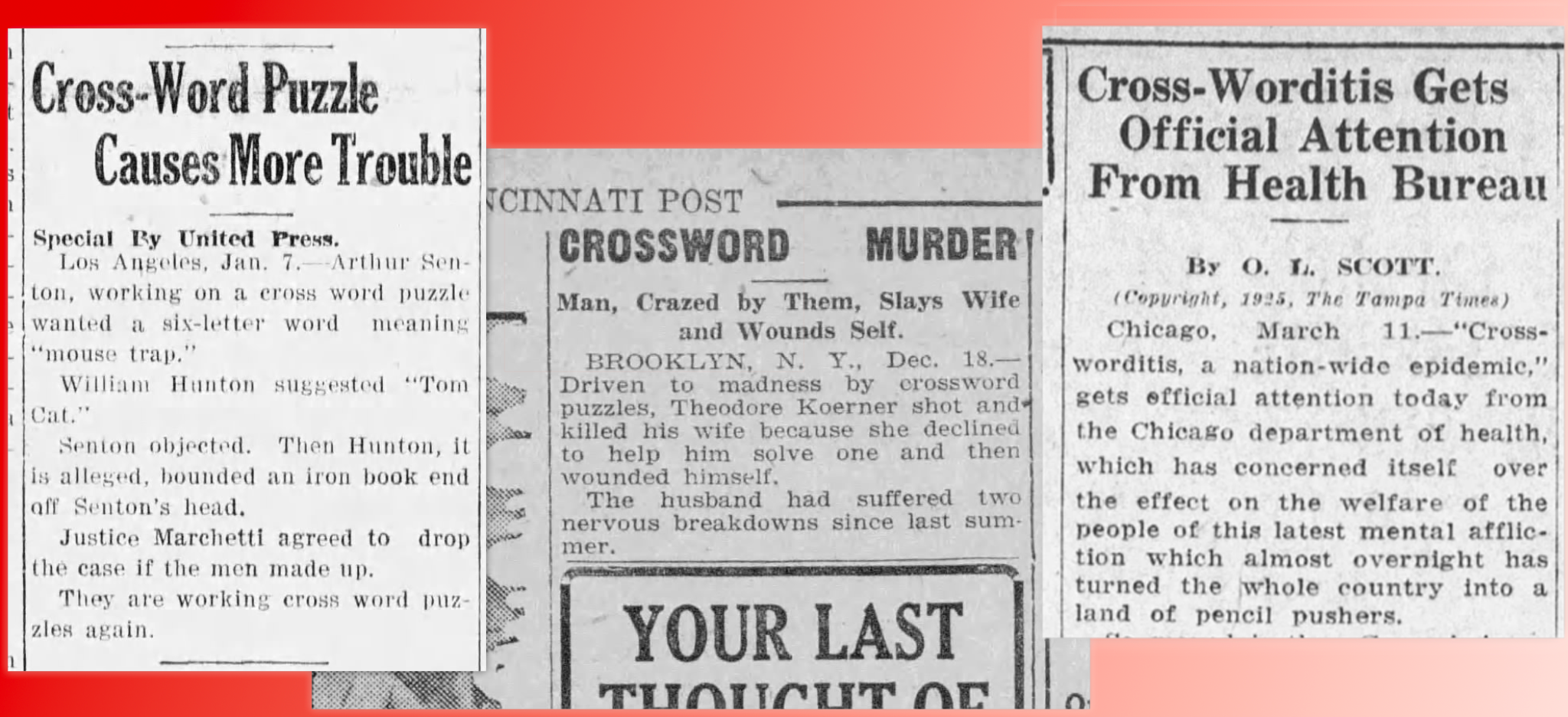
Newspapers played a big role in spreading crossword puzzles. They added puzzles to fill space and attract readers. This helped the puzzles become a daily habit for many.
By the 1920s, many newspapers featured crosswords. The puzzles were easy to print and enjoyed by millions. This helped boost newspaper sales and reader engagement.
- Daily crosswords appeared in major newspapers
- Special editions included larger or themed puzzles
- Newspapers created contests to encourage solving
Cultural Impact In The 20th Century
Crossword puzzles became part of daily life and culture. They appeared in books, magazines, and on radio shows. Solving puzzles was seen as a smart and fun activity.
Many schools used crosswords to help students learn new words. The puzzles also inspired other word and logic games. They became a symbol of leisure and intelligence.
- Used in education to improve vocabulary
- Featured in popular culture and media
- Encouraged social gatherings and competitions
Other Contributors And Variations
Crossword puzzles have many creators besides the original inventor. Many people helped change and improve the puzzle over time. These contributors added new ideas and styles.
The puzzle also grew into many different types. These variations made crosswords more fun and interesting for different players.
Notable Puzzle Creators
Arthur Wynne made the first crossword puzzle in 1913. After him, many others made their own puzzles. Margaret Farrar was a key editor who helped shape the modern crossword.
Will Shortz, a famous puzzle editor, created many new puzzles and styles. Other notable creators include Merl Reagle and Ellen Ripstein. They all helped crosswords become popular worldwide.
- Arthur Wynne – Created the first crossword puzzle
- Margaret Farrar – Set the standard for clue writing
- Will Shortz – Added new puzzle types and edited many puzzles
- Merl Reagle – Known for creative and themed puzzles
- Ellen Ripstein – Created challenging and clever puzzles
Innovations In Crossword Styles
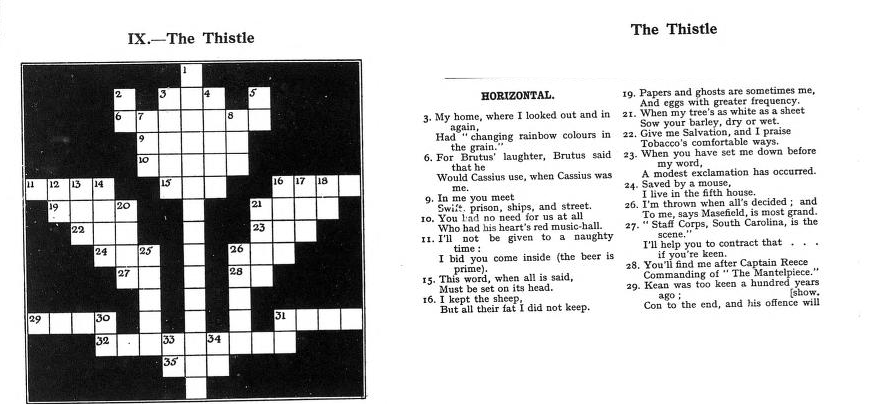
Crossword puzzles have many different styles today. Some puzzles have themes, while others use special rules. These changes keep the puzzles fresh and fun.
Some innovations include cryptic crosswords, which have tricky clues. Others use shapes or colors in the puzzle grid. These new styles attract different kinds of solvers.
- Themed crosswords – puzzles with a common topic or idea
- Cryptic crosswords – puzzles with complex, wordplay clues
- Diagramless crosswords – no black squares given, solver fills them
- Shape puzzles – grids form pictures or patterns
- Color-crosswords – use colors instead of black and white squares
Credit: humanparts.medium.com
Legacy And Modern Influence
Crossword puzzles have a rich history that spans over a century. They continue to be a beloved pastime for many. Their influence has evolved with time, impacting both print and digital media.
From their inception, crosswords have captivated audiences worldwide. They challenge the mind and entertain people of all ages. Today, their presence is felt strongly in the digital age.
Crosswords In Digital Age
The digital age has transformed how we engage with crosswords. Online platforms and apps make them accessible to a global audience. This shift has introduced new features and interactive elements.
- Online puzzles offer instant feedback and hints.
- Apps provide daily challenges to keep users engaged.
- Multiplayer modes allow friends to solve puzzles together.
Enduring Appeal Worldwide
Crosswords have an enduring appeal that transcends cultures. They are enjoyed in many languages and formats. This universal charm keeps them relevant today.
Crossword puzzles are available in various forms:
| Format | Medium |
| Printed | Newspapers, magazines |
| Digital | Apps, websites |
| Interactive | Social media |
Credit: humanparts.medium.com
Frequently Asked Questions
Who Invented The First Crossword Puzzle?
Arthur Wynne, a British journalist, invented the first crossword puzzle in 1913. It appeared in the New York World newspaper. His design laid the foundation for modern crossword puzzles.
When Was The First Crossword Puzzle Created?
The first crossword puzzle was created in December 1913. It was published on December 21, 1913, in the New York World newspaper.
How Did Arthur Wynne Design The First Crossword?
Wynne created a diamond-shaped grid with a hollow center. Clues were numbered, and words crossed each other both horizontally and vertically.
Why Are Crossword Puzzles Popular Worldwide?
Crossword puzzles challenge the mind and improve vocabulary. They are fun, educational, and accessible to all ages, boosting cognitive skills.
Conclusion
Crossword puzzles began with Arthur Wynne’s idea in 1913. Since then, they have grown into a popular pastime worldwide. People enjoy solving clues and filling grids for fun and learning. These puzzles help improve vocabulary and keep the mind sharp.
Many newspapers and apps now share daily crosswords. The simple idea of Wynne continues to bring joy. Crossword puzzles remain a timeless challenge for all ages.