Have you ever wondered why so many toys for newborns are black and white? It might seem like a simple choice, but there’s a powerful reason behind it.
Your baby’s vision is still developing, and certain colors and patterns can make a big difference in how they see and learn. Understanding this can help you choose the best toys to support your little one’s growth right from the start.
Keep reading to discover why black and white toys are more than just a style—they’re a smart way to boost your baby’s early development.
Visual Development In Newborns
Newborn babies see the world very differently from adults. Their eyes and brains are still learning how to process what they see. This early stage of visual development is key for their growth. Black and white toys help with this learning.
These toys show clear patterns and shapes that attract newborns. The high contrast helps their eyes focus and understand images better. This support is important in the first few months of life.
How Newborn Vision Works
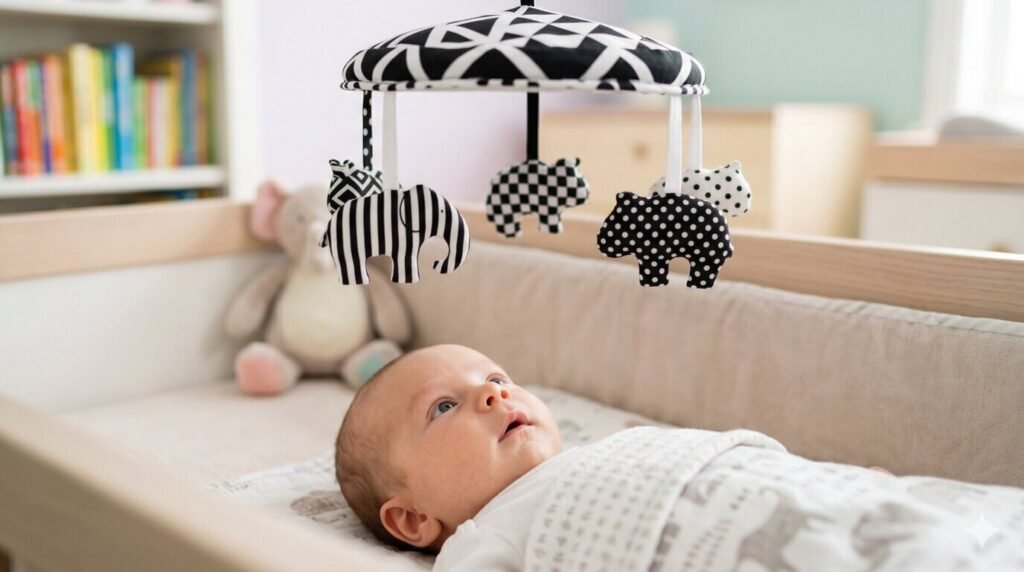
Newborns see mostly blurry shapes and shadows at first. Their eyes cannot focus on small details well. Their vision is best at about 8 to 12 inches from their face. This distance is perfect for seeing a parent’s face during feeding or cuddling.
The brain and eyes work together to improve vision over time. Newborns notice strong contrasts first. This helps them recognize faces and objects around them.
Contrast Sensitivity At Birth
At birth, babies can see black, white, and shades of gray best. They struggle with colors and soft tones. Strong contrasts catch their attention easily. This is why black and white patterns are used in toys and books.
These patterns make it easier for babies to focus their eyes and track movement. This helps build important visual skills. Over time, their color vision and detail recognition get stronger.
Role of Black And White Colors
Newborn babies see the world differently than adults. Their vision is blurry at first. Bright, colorful objects look fuzzy and hard to focus on. Black and white colors create strong contrasts that are easier for babies to see. These colors help babies notice shapes and patterns. This is why many newborn toys use only black and white. It supports early vision development and keeps babies interested.
High contrast colors catch babies' eyes quickly. They help babies learn to focus better. This simple color choice helps babies explore their world with their eyes. Toys with black and white patterns encourage babies to look longer and pay attention more.
High Contrast Benefits
Black and white colors create clear and sharp contrasts. Babies can see these contrasts even with weak eyesight. High contrast patterns stand out against plain backgrounds. This helps babies focus on shapes and edges. It trains their eyes to detect differences. Early exposure to high contrast supports better vision skills. Babies become more alert and curious about what they see.
Stimulating Neural Pathways
Seeing black and white patterns activates baby's brain. It helps build neural connections in the visual cortex. These brain pathways are essential for recognizing objects and faces. Early stimulation strengthens brain development. Simple patterns make it easier for babies to process information. This early brain exercise supports later learning and memory skills.
Scientific Studies on Infant Visual Stimulation
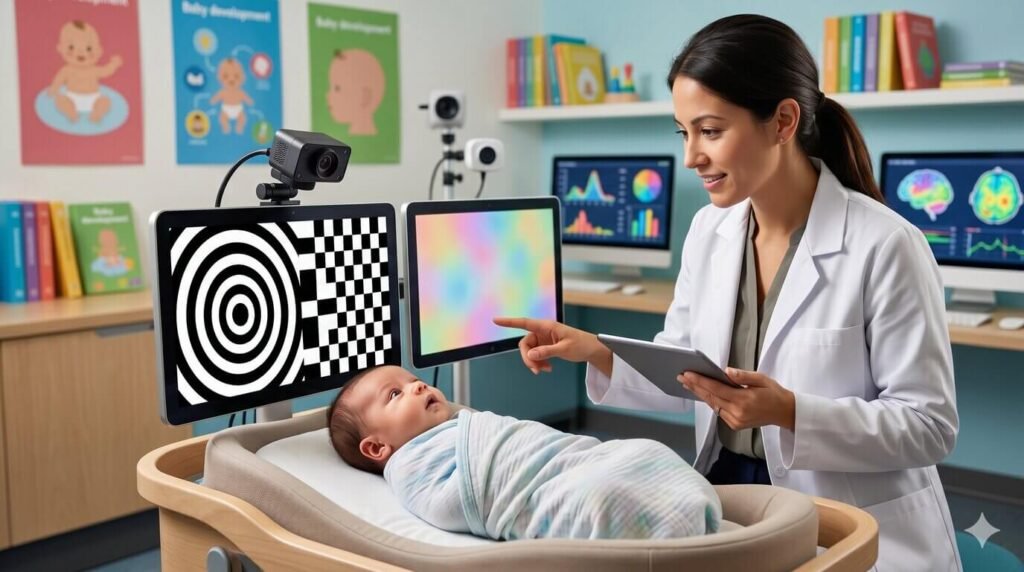
Scientific studies on infant visual stimulation help explain why newborn toys are black and white. Babies see the world differently at birth. Their eyesight is blurry and not fully developed. High contrast colors like black and white catch their attention more easily. Researchers have tested how babies respond to different visual patterns. These studies guide toy makers to create items that support early vision development.
Scientists use special tests to measure newborns’ reactions to colors and shapes. The results show that infants focus longer on black and white objects. This focus helps strengthen their eye muscles and brain connections. Understanding these effects helps parents choose better toys for their babies.
Research Findings
Studies reveal newborns prefer bold, simple patterns. Black and white stripes, checks, and circles are easiest for babies to see. Their eyes quickly notice the contrast. Babies spend more time looking at these patterns than soft colors. This attention helps improve their visual tracking skills. Research proves that early exposure to high contrast images supports healthy vision.
Impact On Cognitive Growth
Visual stimulation is key to brain development in newborns. Seeing clear, sharp images builds neural pathways. These pathways help babies learn about shapes and space. Early focus on black and white patterns boosts memory and attention. Visual experiences also link to language and problem-solving skills later. Toys with strong contrasts provide essential brain training for infants.
Designing Toys For Early Learning
Toys for newborns are created to help babies learn and grow. Their design focuses on what babies can see, touch, and feel. Black and white colors are common because babies notice high contrast best. This helps their eyes develop faster.
Designers also think about the toy’s shape and material. These choices support babies’ senses and keep them safe. Every detail matters to make toys useful and fun for early learning.
Material And Shape Choices
Toys use soft, safe materials that babies can hold and chew. Shapes are simple and clear. Rounded edges prevent injuries. Big shapes help babies grab and explore easily. These features encourage babies to use their hands and fingers.
Safety And Sensory Engagement
Safety is the top priority in toy design. Non-toxic materials protect babies from harm. Toys are made without small parts that could cause choking. Textures vary to stimulate touch. The black and white colors boost visual focus and brain activity. Sensory details keep babies interested and help their senses develop together.
Alternatives And Color Progression
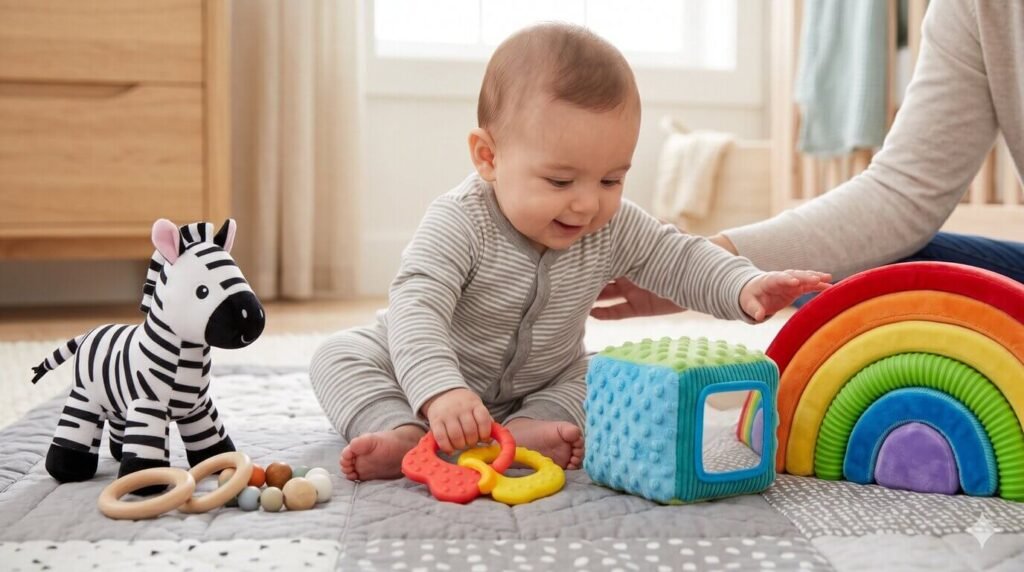
Newborn toys often start with black and white colors. These colors help babies see shapes and patterns clearly. But as babies grow, their vision changes. They begin to notice more colors around them. Parents and caregivers can choose toys with different colors at the right time. This helps babies develop their sight and curiosity. Using a mix of colors and textures keeps toys interesting and useful.
Introducing Colors Over Time
At first, babies see high contrast colors best. Black and white offer the strongest contrast. After a few weeks, babies start to see red and yellow. These bright colors catch their attention easily. Gradually, add toys with blue, green, and other colors. This helps babies learn to recognize and enjoy colors. Changing toy colors slowly matches babies’ growing vision skills.
Balancing Visual And Tactile Stimuli
Toys should not only look good but feel good too. Different textures teach babies about touch. Soft, rough, smooth, and bumpy surfaces all help. Mixing colors with textures makes playtime fun and learning rich. Babies use their hands and eyes together. This balance builds their brain and motor skills. Toys with both visual and tactile features are very helpful.
Tips For Parents Using Black And White Toys
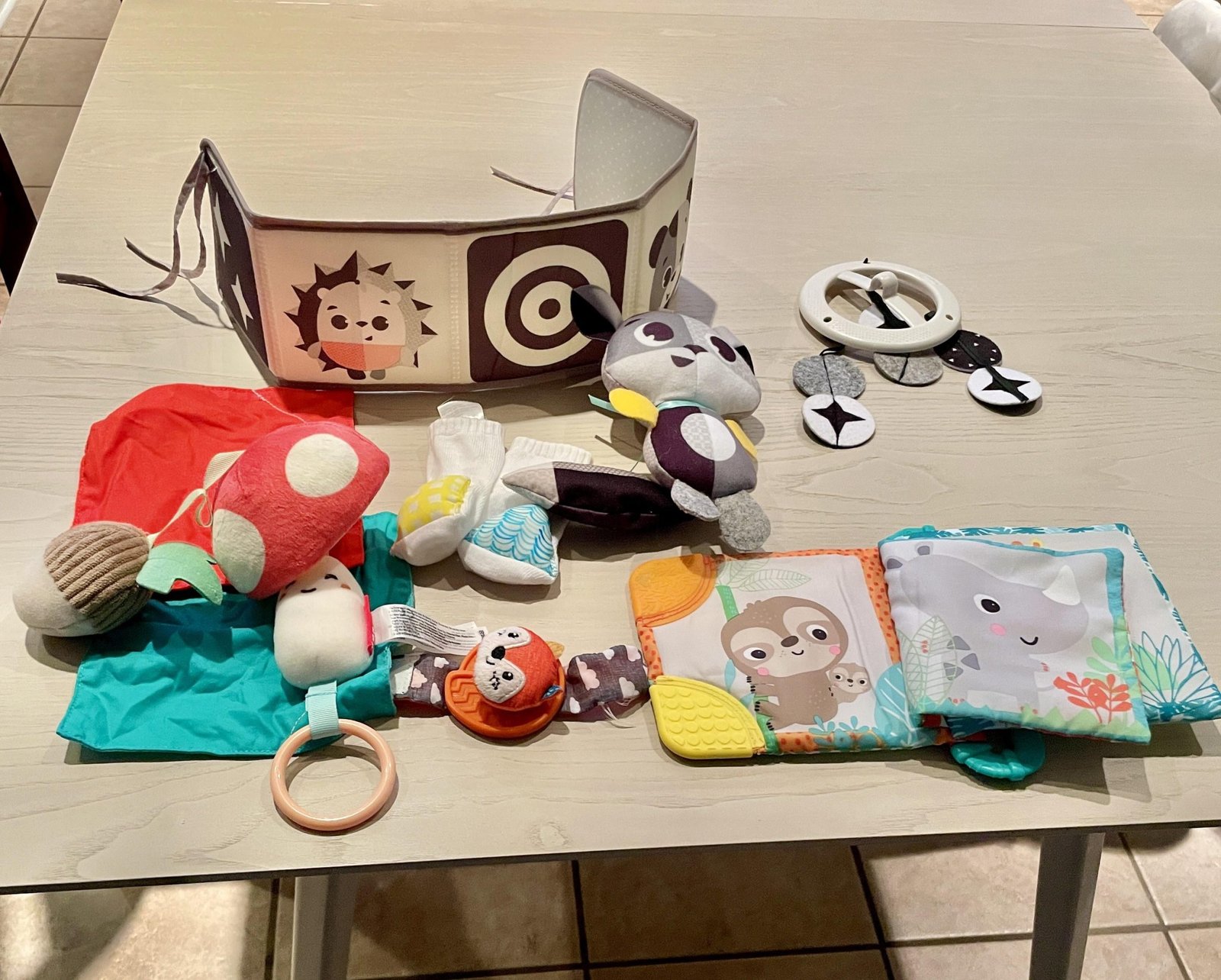
Black and white toys catch a newborn’s attention easily. These high-contrast colors help babies see shapes and patterns clearly. Parents can use these toys to support early brain and vision development. Here are some tips for parents using black and white toys to make playtime more effective and fun.
Maximizing Interaction
Hold the toy close to your baby’s face. Move it slowly from side to side. This encourages the baby to follow the toy with their eyes. Talk softly while showing the toy. Use simple words to describe the shapes or colors. Smile and make eye contact. This builds connection and helps your baby learn.
Combining With Other Learning Tools
Use black and white toys with books or soft music. Books with large, clear pictures add variety. Soft music calms and soothes your baby. Change the toys often to keep the baby interested. Mix textures by adding soft or bumpy toys. This supports different senses and helps the baby explore.
Frequently Asked Questions
Why Are Newborn Toys Mostly Black And White?
Newborn toys are black and white because babies see high-contrast colors best. These colors help stimulate their vision early on. Black and white patterns attract attention and improve focus, aiding brain development. Bright or muted colors are harder for newborns to distinguish.
How Do Black And White Toys Benefit Baby Development?
Black and white toys enhance newborns' visual tracking and attention skills. The stark contrast boosts neural connections in the brain. These toys support cognitive growth and sensory development. They also encourage early focus and curiosity in infants.
When Should Babies Start Using Colored Toys?
Babies begin seeing colors around 2 to 3 months old. Before then, black and white toys are more effective. Introducing colored toys too early can overwhelm their vision. Gradually add colors as their eyesight matures for better engagement.
Are Black And White Toys Safe For Newborns?
Yes, black and white toys are safe when made from non-toxic materials. They are designed specifically for newborns' sensory needs. Always check for choking hazards and choose age-appropriate toys. These toys combine safety with developmental benefits.
Conclusion
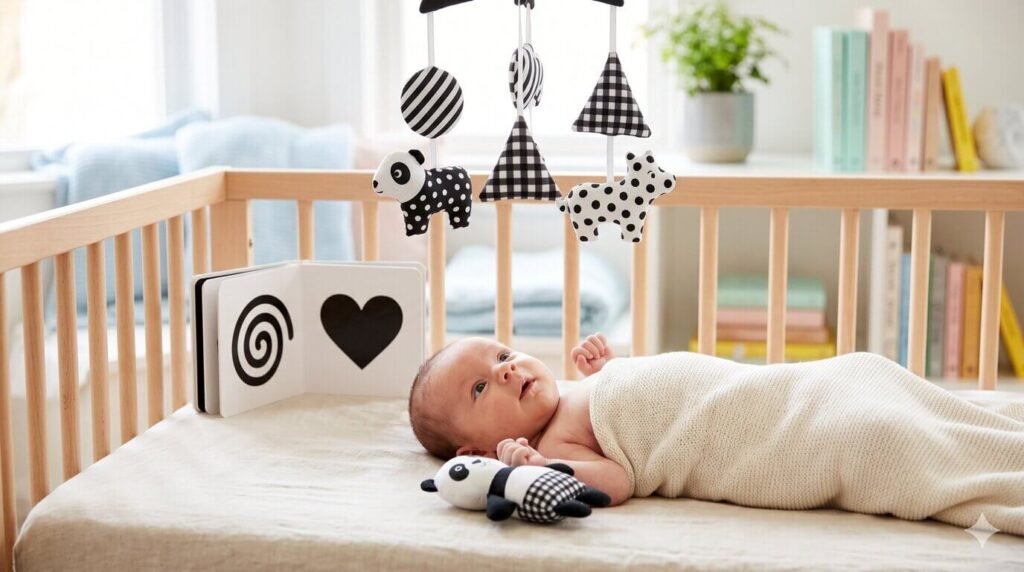
Black and white toys help newborns see clearly. Their sharp contrast makes it easier to focus. Babies’ eyes are still developing, so simple colors work best. These toys also help babies learn to recognize shapes and patterns. Choosing black and white toys supports early brain growth.
Parents can help babies explore the world step by step. Bright or complex colors come later as vision improves. Simple toys bring joy and learning together. That’s why newborn toys often come in black and white. It’s a smart, gentle start for little eyes.